
Hospitals run Google Ads for many reasons: to fill clinics for elective procedures, to promote new services, to make sure patients can find urgent care and to reach people comparing options. But a hospital account that is set up like a small local business account quickly becomes messy and wasteful. This guide explains how hospital Google Ads services should be structured and what to ask a provider. It is written for hospitals in the USA, UK, Canada and Australia.
If you are still choosing a partner, see our guide to picking a hospital marketing agency. For budget planning, read our hospital advertising budget guide.
Why Hospital Google Ads Need a Different Structure
- People search very differently for cardiology, maternity, orthopedics and emergency care.
- Some services are urgent, while others involve weeks of research and comparison.
- Different departments may have different capacity, goals and seasonality.
- Each campus or location may need its own targeting.
- Compliance and privacy requirements are stricter than in most industries.
Start With Service Lines, Not Keywords
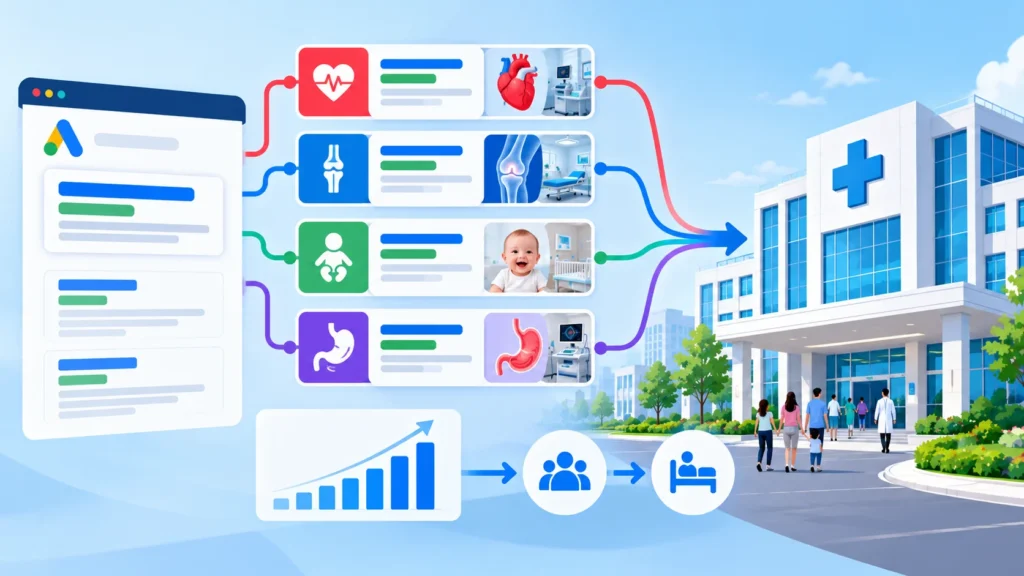
The best structure begins with the hospital’s business priorities. Which service lines have capacity? Which are most important? Which have the strongest doctors and outcomes to talk about? Then campaigns can be organized around those.
| Campaign | Example focus | Typical search intent |
|---|---|---|
| Service line: Cardiology | Cardiologist, heart clinic, specific tests or procedures | Research and booking |
| Service line: Orthopedics | Joint pain, knee or hip procedures, sports injuries | Long research cycle |
| Service line: Maternity | Maternity care, antenatal classes, delivery options | Planning ahead |
| Urgent and emergency information | Location, hours, wait information (where appropriate) | Immediate need |
| Brand and doctor names | Hospital name, doctor names | High intent, protects your name |
Within each campaign, group keywords by theme so that each group has its own ad text and landing page.
Emergency vs Elective Care
Emergency and urgent care are about being clear, accurate and fast. In a real emergency, people should be directed to call local emergency services, and ads should never delay that. Many hospitals keep ads for urgent care limited to clear location, hours and contact information, and run most paid search around planned and elective services where there is time to research and compare. Your clinical and compliance teams should approve this approach.
Landing Pages Matter as Much as Ads
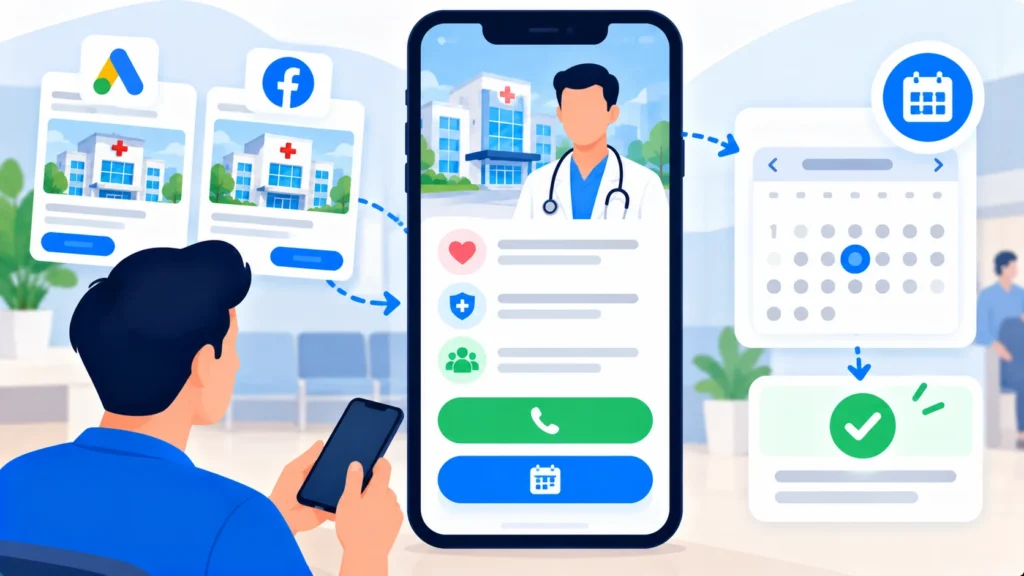
Sending every click to the homepage wastes money. Each campaign should point to a page for that service with:
- A clear explanation of the service and who it is for
- Doctor information and credentials
- Locations, hours and parking or access details
- An obvious way to call or request an appointment
- Fast loading on mobile devices
Targeting by Location
Most hospital patients come from a defined area, though specialist services can draw people from further away. Set locations to match each service and campus, and review which areas actually bring enquiries. Check location settings so ads reach people in your area rather than anyone merely interested in it.
Tracking Without Compromising Privacy
Measuring phone calls, form submissions and appointment requests is important, but tracking tools should not send sensitive health information to advertising platforms. In the USA especially, work with your compliance team and read our guides on HIPAA and paid ads and tracking pixels in healthcare. In the UK, Canada and Australia, privacy laws also apply, so your provider should be able to explain how data is handled.

Know the Ad Policies
Google has policies for healthcare and medical advertising, and some topics have extra restrictions or require certification. Policies differ between countries and change from time to time. Always check Google’s current policy pages and your local advertising rules before launching new campaigns.
What Good Hospital Google Ads Services Include
- Audit and goals: what you want to achieve per service line.
- Account structure: campaigns organized by service line and location.
- Keyword strategy and negative keywords: to avoid jobs, students, free information seekers and unrelated searches.
- Ad copy that is accurate and compliant: no guarantees or exaggerated claims.
- Landing page recommendations.
- Conversion tracking for calls and appointment requests, configured with privacy in mind.
- Regular optimization of search terms, bids and budgets.
- Clear reports covering enquiries, cost per enquiry and service-line priorities.
For a closer look at what a clean account should look like, use our 12-point Google Ads audit checklist.
Common Mistakes in Hospital Ad Accounts
- All services mixed in one campaign with the same budget
- Sending all traffic to the homepage
- No negative keywords, so budget goes to unrelated searches
- Counting any page view or click as a conversion
- Ignoring call tracking, even though many patients phone
- Leaving ads running when a department has no capacity
- Using tracking set-ups that nobody on the compliance team has reviewed
Frequently Asked Questions
Is Google Ads or SEO better for hospitals?
They do different jobs. Ads can create visibility quickly for specific services, while SEO builds longer-term presence. See our guide to hospital SEO services.
Can hospitals advertise all services on Google?
Not always. Some topics have restrictions that vary by country and policy updates. Check current Google policies and your local regulations.
How do we measure success?
Track calls, appointment requests and, where possible, booked appointments, along with cost per enquiry and enquiry quality by service line.
Should different campuses have separate campaigns?
Often yes, especially when locations offer different services or serve different areas.
The Bottom Line
The best hospital Google Ads services are organized around service lines, careful about privacy and policy, honest in their messaging and focused on real enquiries rather than clicks.
See how Globdigi helps with Google Ads management and our work for multi-specialty hospitals, or request a free account audit.
Disclaimer: This article is for general information only and is not legal, medical or compliance advice. Prices, features, policies, laws and results can change or may not apply to your situation, and we do not guarantee accuracy, outcomes or future performance. Please verify important details, including pricing, regulations and commitments, with the official source or website, or a qualified professional, before acting on them.