

Many hospital marketing plans fail for a simple reason: they try to promote everything at once. A good hospital digital marketing strategy starts with choices. Which service lines matter most? Which patients do you want to reach? What does success look like, and how will you measure it?
This playbook walks through a practical approach that works for hospitals in the USA, UK, Canada and Australia. It supports our guide to choosing a hospital marketing agency.
Step 1: Set Goals Tied to Real Outcomes
Start with outcomes the hospital cares about, such as more appointment requests for a priority service line, fewer missed calls, better visibility for a new department or more referrals from other doctors. Avoid goals that only measure activity, such as “more followers”.
Step 2: Choose Priority Service Lines
List your service lines and rate each one on a few questions: Do we have capacity? Is it a strategic priority? Is there real search demand? Are we competitive? Start with the two or three that answer yes to most. Trying to push every department equally spreads your effort thin.
Step 3: Understand the Patient Journey
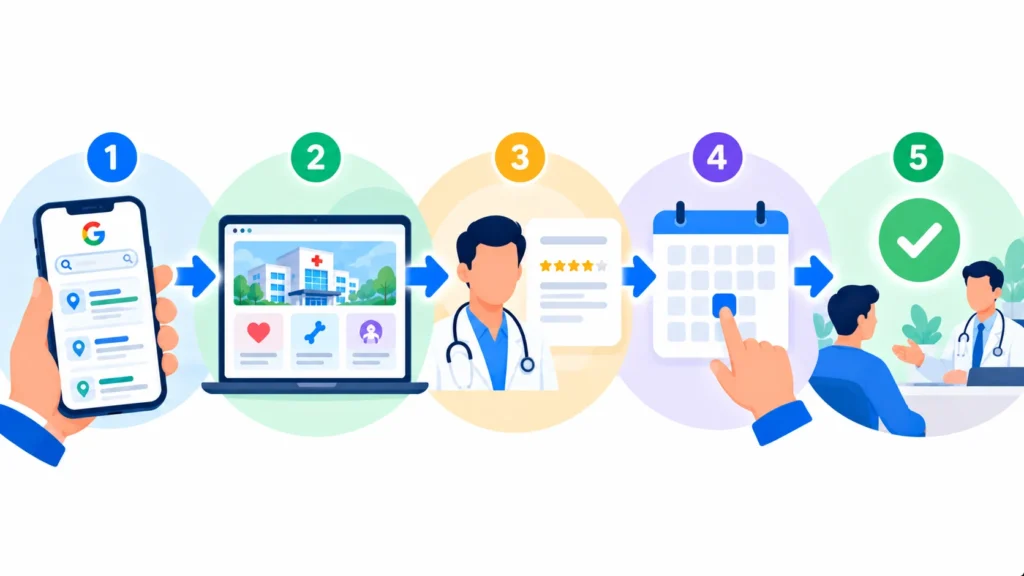
For each priority service, think through how a patient moves from first symptom or question to booked appointment:
- Awareness: “What is causing this?” or “Do I need to see someone?”
- Consideration: “Who treats this near me?” and “What are my options?”
- Decision: “Is this hospital right for me?” reviews, doctor profiles, access and referral details.
- Action: call, book online or request an appointment.
- After the visit: follow-up, reviews and ongoing care.
Your marketing should help at each step without making medical promises.
Step 4: Fix the Foundations First
- Website: fast on mobile, clear navigation, a page for each priority service and easy ways to book or call.
- Listings: accurate Google Business Profiles for each location, consistent names, addresses and hours.
- Tracking: measurement for calls and appointment requests, configured with privacy in mind. See our guides on HIPAA and paid ads and tracking pixels in healthcare.
- Phone handling: a plan so calls from ads and search are answered quickly.
Step 5: Build Visibility With SEO
SEO is the long-term engine of a hospital’s digital presence. Focus on service-line pages, doctor profiles, local SEO for each site and helpful educational content reviewed by clinical staff. Read more in our guide to hospital SEO services.
Step 6: Use Paid Search for Priority Services
Google Ads can bring in patients for specific services while SEO grows. Structure campaigns by service line, point each to a matching page and measure enquiries. See hospital Google Ads services and our guide to organizing Google Ads for hospitals.
Step 7: Add Social and Video Carefully
Social media and video help with trust and community awareness: doctor introductions, patient education and health events. Keep ads focused on services and information, not on a person’s health condition, and follow platform rules.
Step 8: Manage Reputation
Patients read reviews. Create a respectful process for asking for feedback, replying to reviews without sharing patient information and fixing issues that come up repeatedly.
Step 9: Build Referral Visibility
Many service lines depend on referring doctors. Simple things help: a clear referral page, easy-to-find contact details for referral coordinators and doctor profiles that explain areas of focus.
Step 10: Measure What Matters
| Area | What to look at |
|---|---|
| Visibility | Search impressions and rankings for priority service lines |
| Traffic quality | Visits to service and doctor pages |
| Enquiries | Calls, forms and appointment requests |
| Efficiency | Cost per enquiry by service line |
| Follow-through | Booked and attended appointments, where trackable |
| Reputation | Review volume and ratings |
Review results monthly and plan changes quarterly. For budgets, see our hospital advertising budget guide.
A Simple 12-Month View
| Quarter | Focus |
|---|---|
| Q1 | Audit, tracking, listings, priority pages, first campaigns |
| Q2 | Expand service-line content, improve landing pages, refine ads |
| Q3 | Add additional service lines, reputation work, video and referral content |
| Q4 | Review the year, plan next year’s priorities and capacity |

Frequently Asked Questions
Where should a hospital start with digital marketing?
With goals, priority service lines and a website and tracking audit. Campaigns come after the foundations are in place.
Should we use ads, SEO or both?
Both usually work best. Ads can reach people quickly for specific services, while SEO builds lasting visibility.
How do we keep marketing compliant?
Involve clinical and compliance teams early, avoid guarantees and sensitive targeting, and verify rules with official regulators in your country.
The Bottom Line
A strong hospital digital marketing strategy is focused. Pick priority service lines, fix the foundations, build SEO, use paid search wisely, protect patient privacy and measure real outcomes.
Talk to Globdigi about our multi-specialty hospital marketing work, or request a free audit.
Disclaimer: This article is for general information only and is not legal, medical or compliance advice. Prices, features, policies, laws and results can change or may not apply to your situation, and we do not guarantee accuracy, outcomes or future performance. Please verify important details, including pricing, regulations and commitments, with the official source or website, or a qualified professional, before acting on them.