

You’ve built your product. You have a small marketing budget. Now you need customers, and every dollar matters.
Should you start with Google Ads or Meta Ads? Here’s a simple way to decide.
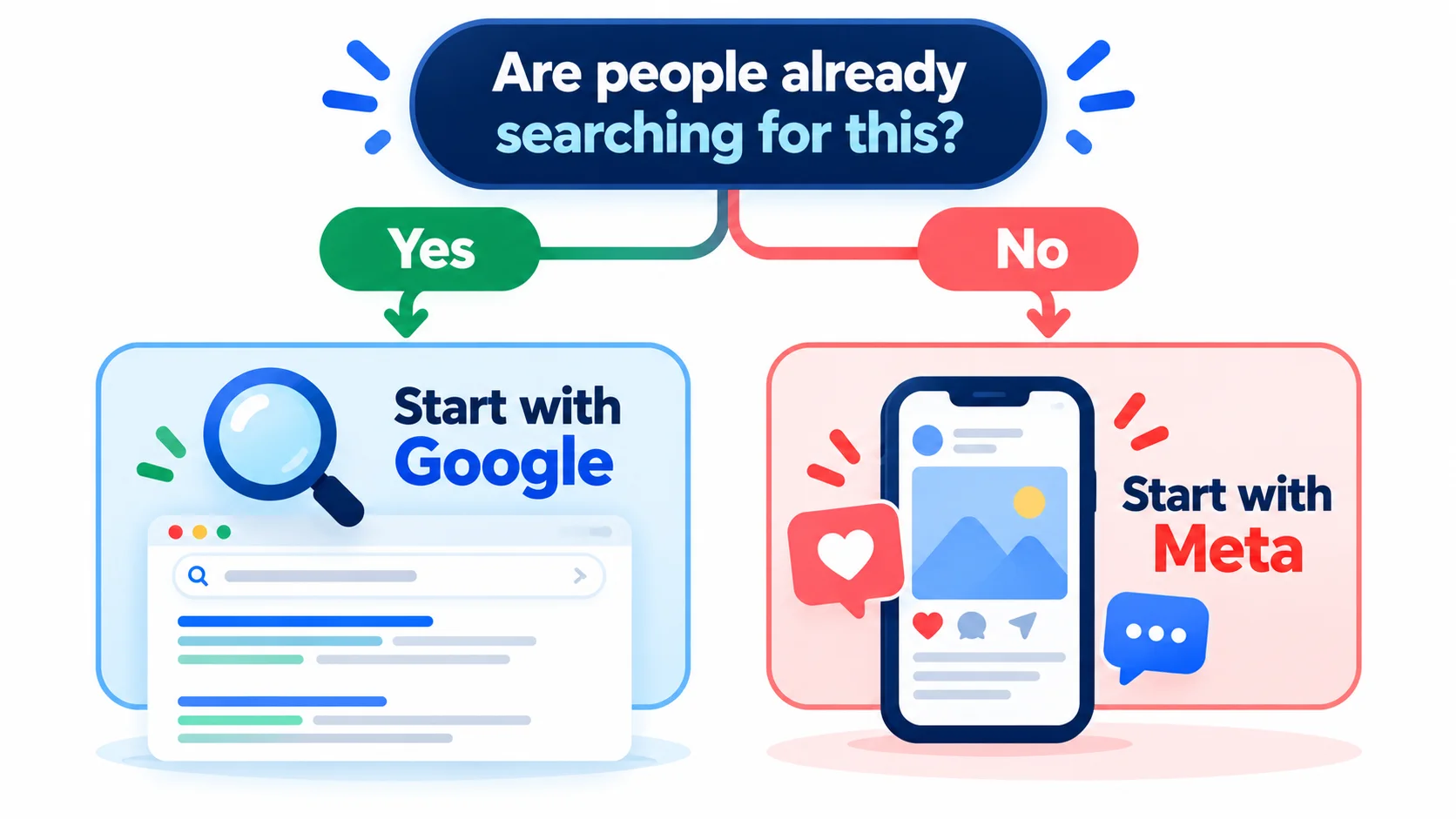
Ask One Question: Are People Already Searching?
- Yes: if people already search for solutions like yours (“invoice software for freelancers”, “dog walking app”), Google lets you capture that demand.
- No: if you’re creating a new category or your product is visual or impulse-driven, Meta lets you show it to people who’ll love it.
How to Test Without Burning Cash
- Set a test budget you’re comfortable losing while learning
- Pick one clear goal: signups, demo requests, purchases
- Set up tracking before launching
- Test a few messages. Which problem or benefit resonates?
- Give it 2–4 weeks before big decisions
What to Measure
- Cost per signup or lead
- How many become active or paying customers
- Which messages and audiences work best
Even “failed” tests teach you valuable things about your market. Set up conversion tracking first so you can learn from them.
Common Startup Mistakes
- Spreading a small budget across too many channels
- No tracking, so no learning
- Sending ads to a generic homepage
- Giving up after one week
- Optimizing for clicks instead of customers

The Bottom Line
Start where your customers already are. Use Google if they’re searching, Meta if they need to discover you. Test carefully, track everything and focus on real customers, not clicks. When you’re ready to grow, read how startups can scale paid ads.
See our startup marketing and SaaS and technology pages.
Related Reading
- Startup Advertising Budget: Best Platforms and a 3-Month Plan
- Facebook Ads vs Google Ads: Which Is Better for Your Business?
- How Much Do Google Ads Cost? Average CPC by Industry
👉 Get a free ads audit for your startup.