
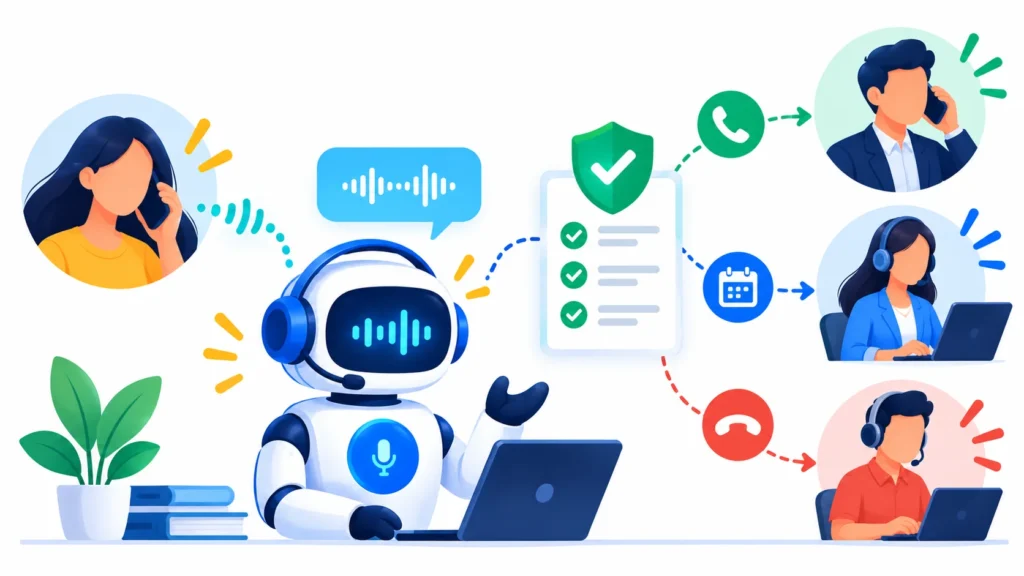
A missed call is often a missed customer, especially for clinics, home services and law firms. An AI voice agent can pick up the phone, note down the caller’s details and even book an appointment, any time of day. But phone calls also come with legal rules and trust issues that a simple website chat does not have. This guide explains in easy words what voice agents do well, where they go wrong and what to check before you start.
Quick Answer: What Is an AI Voice Agent?
It is software that answers (or makes) phone calls using a computer-generated voice. It listens to the caller, understands what they want and replies. Typical jobs are answering after hours, taking a message, answering simple questions, booking or confirming appointments and passing the call to a person when needed.
Where Voice Agents Work Well
- After-hours calls: take a message and send it to your team.
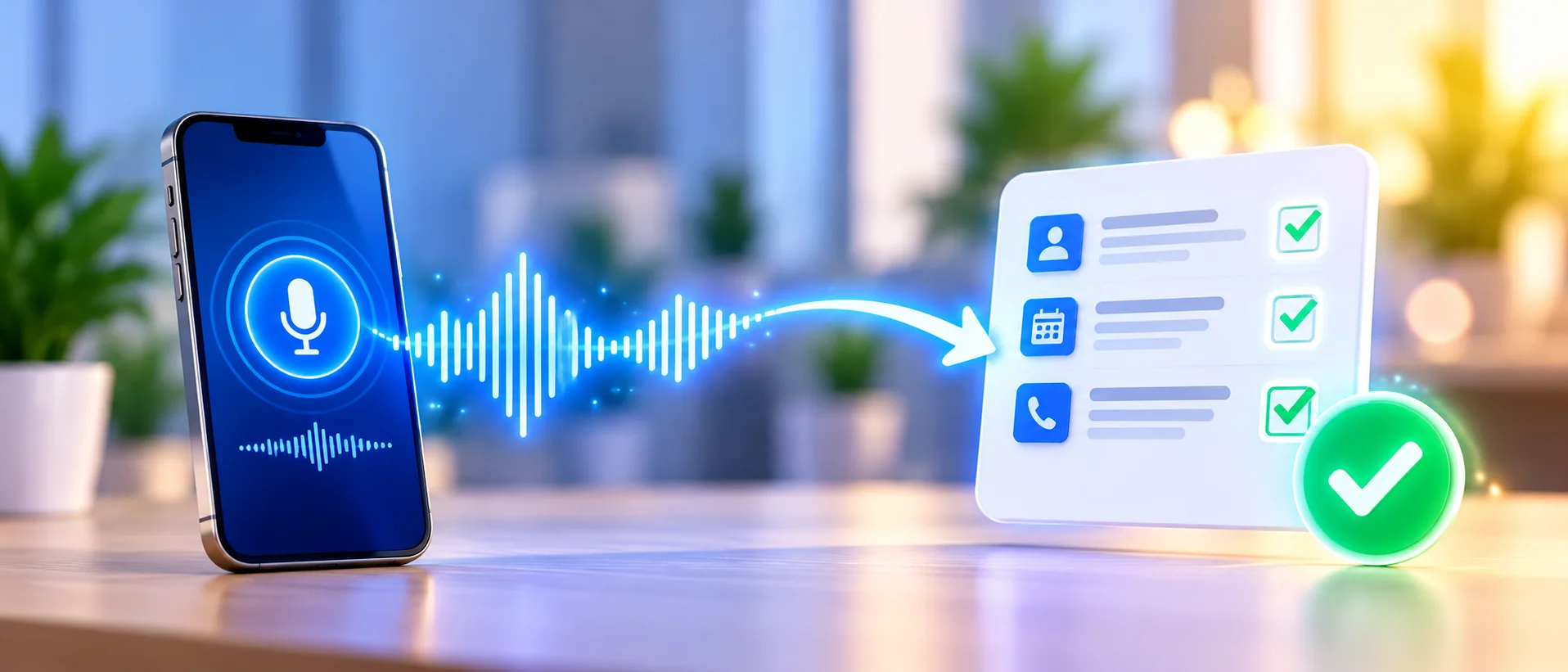
- Bookings and reminders: check open slots and confirm the time.
- Simple questions: opening hours, address, basic details about your services.
- Call routing: send urgent callers to the right person.
Where They Go Wrong
- Noisy lines, strong accents and people talking over the voice.
- Upset or worried callers.
- Complicated prices or advice that needs human judgment.
- Anything where a wrong answer could cause harm, such as medical triage.
Always give callers an easy way to reach a real person, or promise a callback.
Rules to Understand Before You Start
Consent for AI voice calls (US)
The US Federal Communications Commission (FCC) has confirmed that the rules on an “artificial or prerecorded voice” in the Telephone Consumer Protection Act (TCPA) also cover AI technology that creates human-sounding voices. In simple words, calls with such voices need the prior express consent of the person you are calling. This matters most for outbound calls, where you call people first. Please get legal advice before you try outbound AI calling.
Recording calls
In the US, federal law needs only one person in the call to agree to a recording, but some states need everyone to agree. Justia’s 50-state guide lists California, Florida, Illinois, Maryland, Massachusetts, Montana, New Hampshire, Pennsylvania and Washington as all-party or generally all-party states, and a few other states have special rules. Rules in other countries differ. The safe habit is to tell the caller at the start that the call may be recorded.
Say clearly that it is AI
Tell callers they are speaking with an automated assistant. It builds trust, and in some places it is a legal duty. In the EU, Article 50(1) of the AI Act says systems that talk directly to people must tell them they are dealing with AI. This applies from 2 August 2026.
Costs to Ask About
Most voice agents charge per minute, per call or with a monthly plan, plus phone charges. Prices change often, so ask each vendor for the current price, how long they keep recordings and whether a person can take over a live call. We have not put prices here on purpose.
A Simple Pilot Plan
- Start with one small job, such as after-hours messages.
- Write the greeting, including that it is AI and that calls may be recorded.
- Decide when the agent must hand over the call or end it.
- Listen to about 30 real calls a week in the beginning.
- Track answered calls, bookings made and complaints.
Common Mistakes to Avoid
- Starting with outbound sales calls.
- Having no way to reach a person.
- Recording calls without telling the caller.
- Letting the agent say prices it was never given.
When to Get Professional Help
If you want calls, bookings and follow-ups to work together, GlobDigi can plan the setup with you. See our services or read our guide on call tracking for small business.
Frequently Asked Questions
Can an AI voice agent replace a receptionist?
It can handle after-hours and simple calls. Most businesses still need people for sensitive or complicated calls.
Is it legal to use AI voice calls?
It depends on the type of call, where you are and whether people agreed. Take legal advice before outbound calls.
Do I have to tell callers it is AI?
It is strongly recommended, and it is required in some places.
Conclusion
Start small with after-hours answering, keep a person reachable and follow the consent rules.
Ready to plan a safe pilot? Contact GlobDigi.
Sources: FCC on AI voices and the TCPA; Justia: recording calls, 50-state survey; EU AI Act Article 50 guide. Checked October 2026. This is general information, not legal advice.
Related Reading
- Respond to Leads in Under 5 Minutes
- Call Tracking for Small Business
- AI Customer Support for Small Business
Disclaimer: This article is for general information only. Prices, features, policies, laws and results can change or may not apply to your situation, and we do not guarantee accuracy, outcomes or future performance. Please verify important details, including pricing and commitments, with the official source or website, or a qualified professional, before acting on them.