
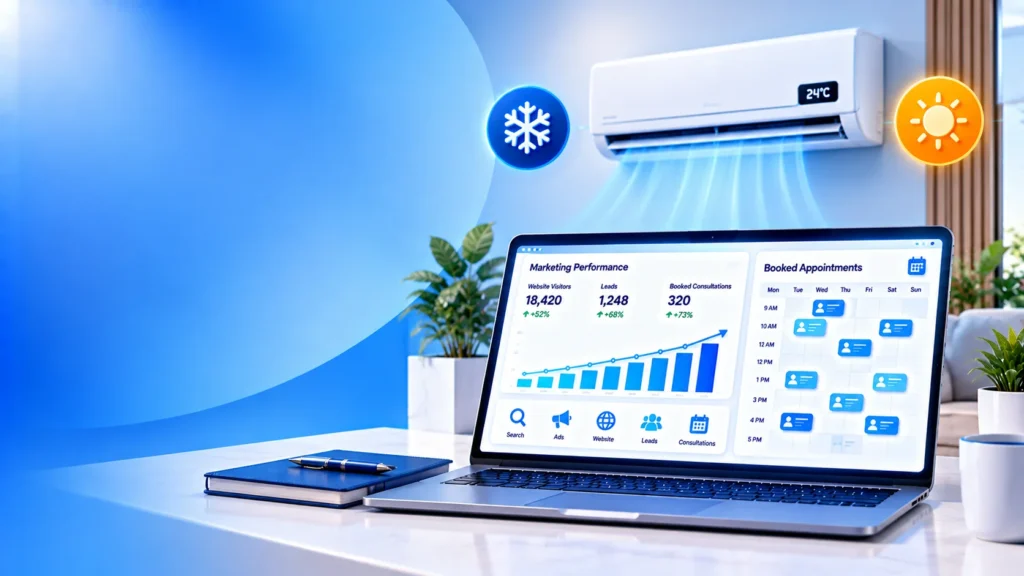
HVAC demand is driven by weather. A heat wave or a cold snap floods the phones, and a mild month can leave technicians idle. Good advertising for an HVAC business is partly about capturing that urgent demand and partly about building steady work, such as maintenance plans and replacement quotes, in the quieter weeks.
Quick Answer: Best Platforms and Starting Budget
- Google Ads Search for AC repair, furnace repair and emergency searches.
- Google Local Services Ads where available, for top-of-page, pay-per-lead visibility.
- Meta Ads for maintenance-plan offers, seasonal tune-ups and retargeting.
- Starting budget: about $2,500–$4,000 per month. This is guidance, not a quote.
Which Advertising Platforms Work Best for HVAC?
For a year-round campaign structure, read how HVAC companies can grow year-round with ads.
Google Ads Search: emergencies and replacements
People with a broken AC or furnace search immediately and call the first trustworthy result. LocaliQ’s 2026 benchmarks for Home and Home Improvement show about $8.33 per click, 8.05% conversion and around $90.92 per lead on search. HVAC clicks can swing higher or lower depending on season and market, so treat these as a starting reference.
Local Services Ads
Where available, LSA gives you a verified badge and charges per lead. They are worth testing next to search, particularly for emergency calls.
Meta Ads: plan the quiet season
Facebook and Instagram help you promote tune-up specials, maintenance memberships and system replacements before the rush. WordStream’s 2025 Facebook benchmarks for Home and Home Improvement lead campaigns show about $2.23 per click, 5.2% conversion and around $41.26 per lead. Expect these leads to need a follow-up call or message to turn into jobs.
Microsoft Ads
An optional extra once Google is performing. See Microsoft Ads management.
Minimum Recommended Monthly Budget
| Level | Monthly ad spend | Scope |
|---|---|---|
| Starter | $2,500 – $4,000 | One service area, Google Search plus LSA |
| Standard | $5,000 – $10,000 | Repair, replacement and maintenance campaigns, Meta |
| Growth | $11,000+ | Multiple territories, seasonal surges, financing offers |
Figures are in US dollars and based on US benchmarks. UK and Australian businesses should use them as a guide and adjust for local conditions.
One Platform or Several?
With a smaller budget, use Google Search first, then add LSA. Meta is most useful once you have enough site traffic to retarget and a clear off-season offer. In peak weather, it can make sense to move money toward search because the cost per click may rise but demand is also at its highest.
Budget Split Examples (Illustrative)
| Platform | Starter ($3,000) | Standard ($6,000) | Growth ($12,000) |
|---|---|---|---|
| Google Search | $2,100 (70%) | $3,300 (55%) | $5,400 (45%) |
| Local Services Ads | $600 (20%) | $1,200 (20%) | $2,400 (20%) |
| Meta Ads | $300 (10%) | $1,200 (20%) | $3,000 (25%) |
| Microsoft and tests | – | $300 (5%) | $1,200 (10%) |
These are illustrative recommendations, not guaranteed results.
A 3-Month Advertising Plan
Month 1: Testing
- Set up call tracking and booking-form tracking. See call tracking for small business.
- Launch separate Google campaigns for repair, installation and maintenance.
- Apply for Local Services Ads where available.
- Create a landing page showing licensing, response times and any financing options.
Month 2: Optimization
- Compare cost per booked job across repair, installation and maintenance.
- Shift budget toward the highest-profit work, which is often replacements and maintenance plans.
- Test a maintenance-plan offer on Meta and retarget site visitors.
Month 3: Scaling
- Increase winning campaigns by about 15–20% at a time.
- Prepare seasonal campaigns in advance so they are ready when the weather turns.
- Check technician capacity before scaling so response times stay fast.
What to Track (and What to Expect)
- Cost per call, cost per booked job and cost per installation lead.
- Average ticket value and maintenance-plan sign-ups.
- Answered-call rate and time to first response.
Results vary by climate, season, competition and how quickly calls are answered.
Common Mistakes to Avoid
- Running the same budget all year when demand is seasonal.
- Not tracking calls, which are the main source of HVAC leads.
- Missing calls after hours during peak weather.
- Treating repair and replacement as the same lead.
- Scaling spend beyond what your team can service.
When to Hire a Digital Marketing Agency
An agency can help when you are managing seasonal swings, several service lines or call tracking you cannot trust. Our HVAC marketing service covers tracking, campaign setup and reporting across Google Ads and Meta Ads, with local SEO to build steady visibility. Book a free strategy call to discuss your season.
Frequently Asked Questions
How much should an HVAC company spend on ads?
Many start at $2,500–$4,000 a month and adjust by season and results.
Is Google Ads or Facebook better for HVAC?
Google is usually better for emergencies and replacements. Facebook helps with maintenance offers and retargeting.
Should I spend more in summer and winter?
Often yes, if your team can handle more calls. Plan campaigns ahead of peak seasons.
How long before I see results?
Calls can come within days. Review cost per job after about 90 days.
Conclusion
Lead with Google Search and LSA, use Meta for off-season offers and track calls to completed jobs. The budgets above are illustrative recommendations, not guarantees.
Sources: LocaliQ search advertising benchmarks (2026); WordStream Facebook ads benchmarks (2025, US campaigns).
Related Reading
- How Much Do Google Ads Cost? Average CPC by Industry
- Home Service Business Automation
- How to Respond to Leads in Under 5 Minutes With Automation
