Meta Ads, on Facebook and Instagram, let you choose who sees your ads. But targeting options and how well they work change over time. This guide explains the main audience types in plain English and how to test them sensibly.
Quick Answer
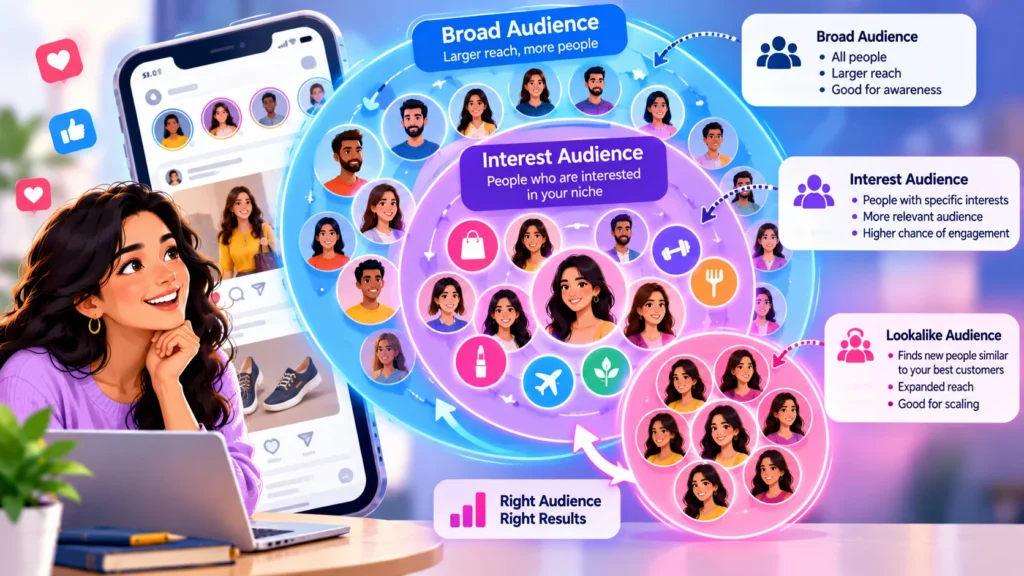
- Broad: let Meta find the right people with minimal restrictions, usually basics like location and age.
- Interest-based: narrow to people who show interest in related topics.
- Lookalike: find people similar to a source audience such as your customers.
- Custom audiences: reach people who already know you, such as website visitors or customer lists.
Audience Types Compared
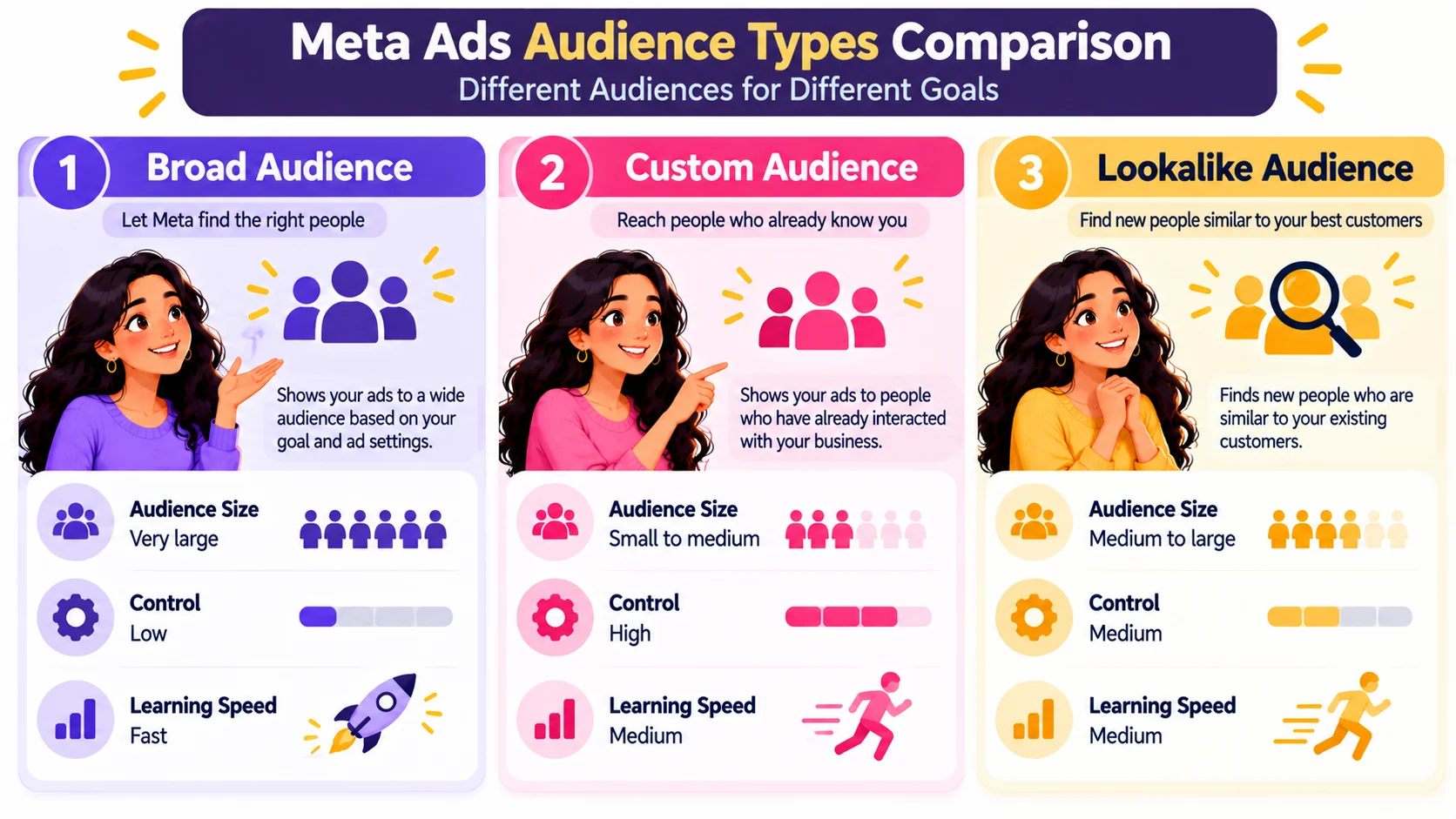
| Type | Control | Reach | Best for |
|---|---|---|---|
| Broad | Low | Large | Accounts with strong tracking and creative |
| Interest-based | Medium | Medium | Testing niche segments |
| Lookalike | Medium | Medium to large | Scaling from good customer data |
| Custom (visitors, lists) | High | Small | Retargeting warm audiences |
Broad Targeting
With broad targeting you give Meta wide room and rely on the algorithm and your creative to find buyers. It works best when conversion tracking is accurate and the ad clearly speaks to your customer.
Interest-Based Targeting
You choose topics or behaviours related to your offer. It can help when you sell to a specific niche, but narrow audiences may become expensive or fatigue quickly.
Lookalike Audiences
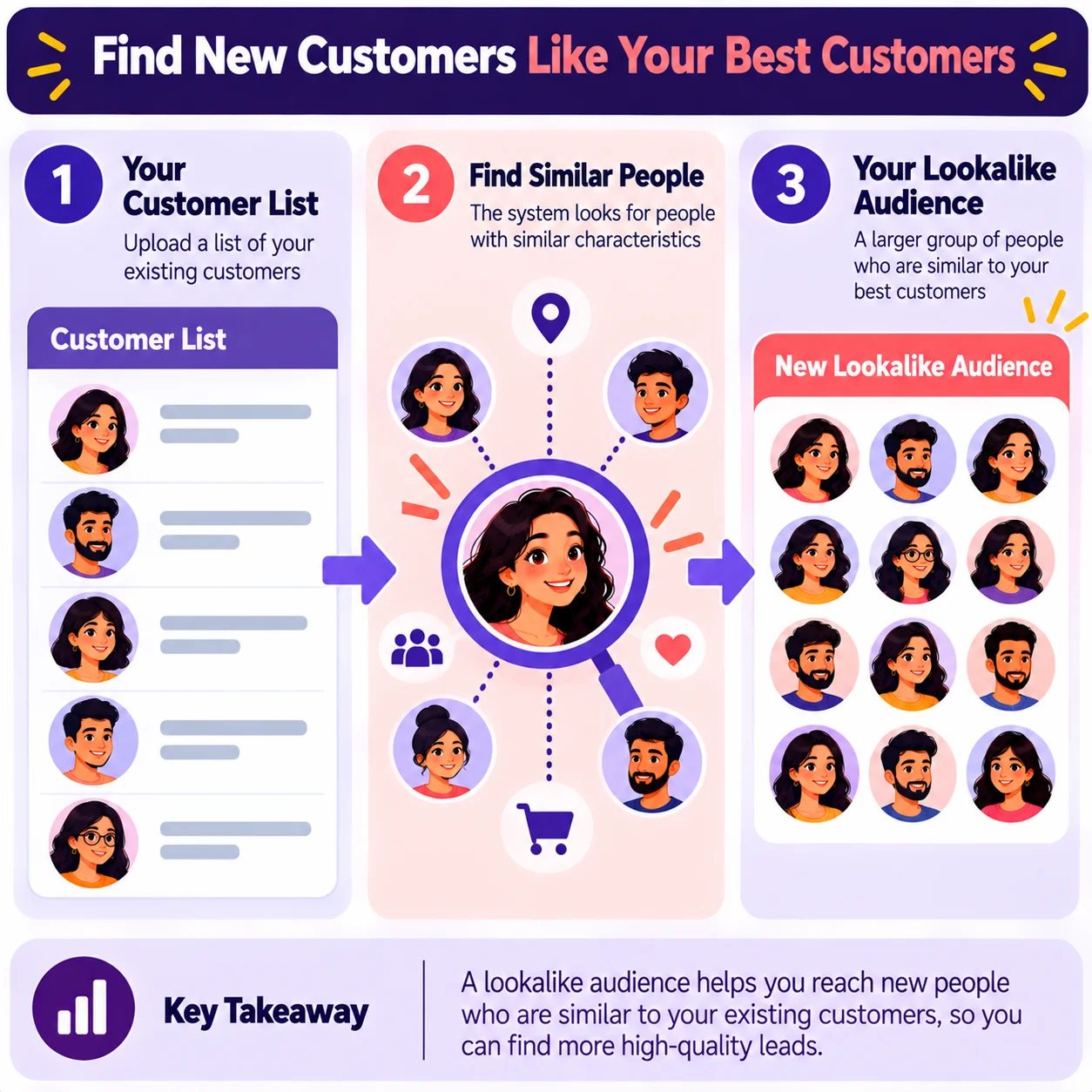
You provide a source, such as customers or high-value leads, and Meta finds people with similar characteristics. A clean, relevant source list matters more than a large one. Follow privacy laws and platform rules when uploading customer data.
Custom Audiences and Retargeting
Reach website visitors, video viewers or people who engaged with your page. These people already know you, so costs are often lower and messages can be more direct.
How to Test Sensibly
- Pick one offer and one landing page.
- Test two or three audience types with similar budgets.
- Keep creative the same while testing audiences.
- Judge by cost per qualified lead, not only clicks.
- Give tests time before changing them.
For wider context, see how channels compare in SEO vs Google Ads.
Special Rules to Remember
Some categories, such as housing, employment and credit, have restricted targeting, and health-related ads face strict policies. Always check Meta’s current advertising rules.
Common Mistakes
- Over-narrowing audiences and starving delivery.
- Using a small or messy source list for lookalikes.
- Changing audiences too often.
- Ignoring creative, which often matters more than targeting.
When to Get Professional Help
If your Meta Ads bring clicks but low-quality leads, GlobDigi can review audiences, tracking and creative. See our services.
Frequently Asked Questions
Is broad targeting always best?
Not always. It tends to work better with strong tracking and creative; smaller accounts may still test interests.
How big should a lookalike source be?
Use the quality-first approach: enough relevant, accurate customers to give Meta a clear signal. Check Meta’s current guidance.
How long should I test an audience?
Allow enough time and spend to collect meaningful results before deciding.
Conclusion
Start simple, test one variable at a time and judge by lead quality. Targeting matters, but great creative and tracking matter more.
Request a free Meta Ads audit.