

You want more patients. Google and Meta Ads can bring them. But you’ve heard warnings about HIPAA, tracking pixels and lawsuits, and now you’re not sure what’s safe.
You’re right to be careful. In recent years, many US healthcare organizations have faced regulatory attention and lawsuits over how their websites shared visitor data with advertising platforms.
The good news: you can advertise your clinic safely. You just need to understand where the risks are. This guide explains it in plain English.
Important: this article is general information, not legal advice. HIPAA rules and their interpretation change, and every clinic is different. Please talk to a healthcare compliance professional or attorney about your specific situation, and verify current rules with official sources such as HHS.
HIPAA in One Minute
HIPAA is a US law that protects patients’ health information. It applies to “covered entities” (like clinics, hospitals and health plans) and the businesses that handle health data for them.
The key idea: you can’t share patients’ protected health information (PHI) with others, including ad platforms, without proper permission or a legal agreement.
PHI isn’t just medical records. It can include information that connects a person to their health, like an IP address or device ID combined with the fact that someone booked an appointment for a specific condition.
Where Ads and HIPAA Collide: Tracking
The ads themselves usually aren’t the problem. An ad saying “Book a dental cleaning today” is fine.
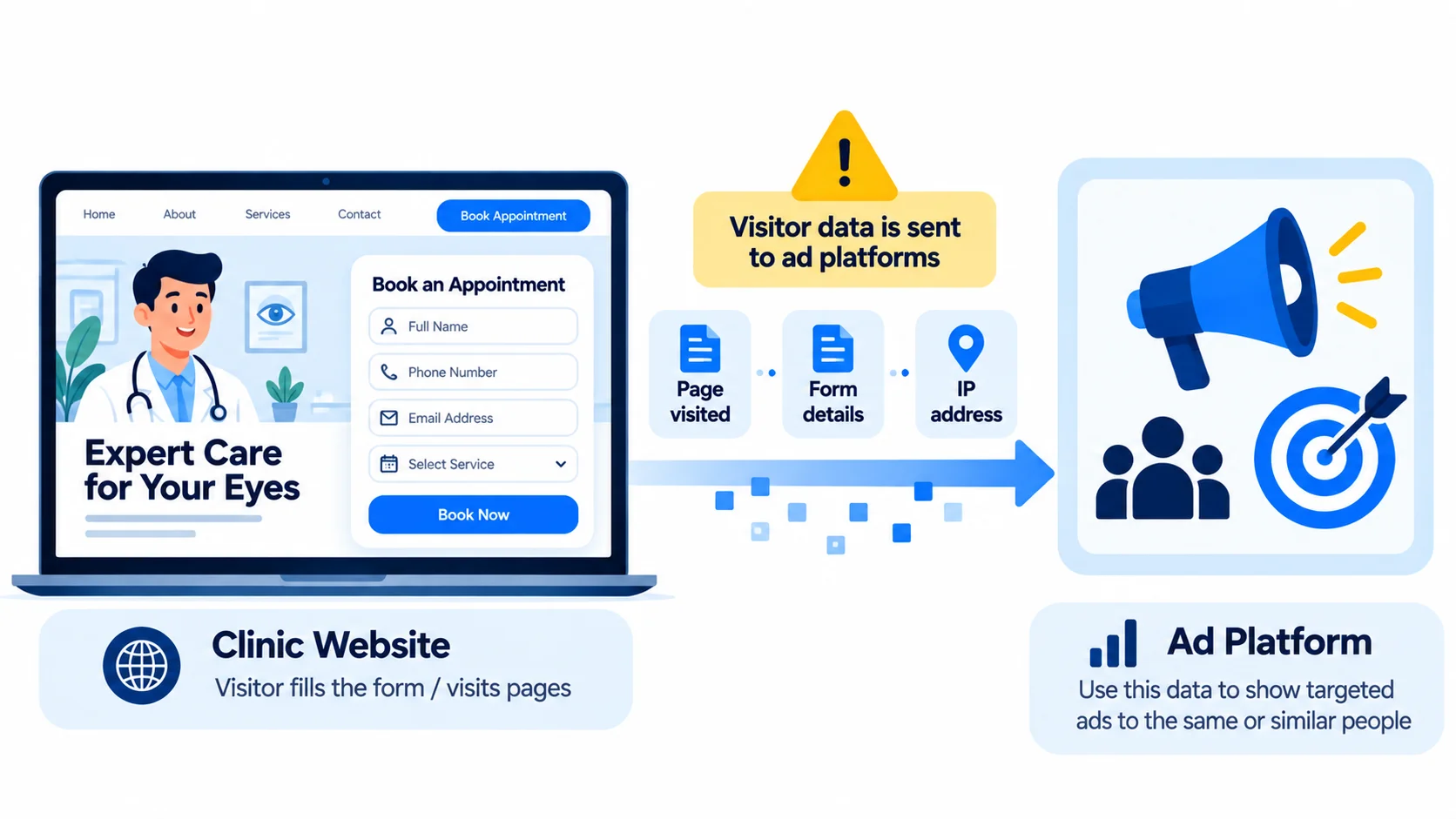
The risk is usually in tracking. To measure ads, businesses add code to their websites, like the Meta Pixel or Google tags. These tools can send information back to Google and Meta, such as:
- Which pages someone visited (for example, “/services/fertility-treatment”)
- What they clicked or typed into forms
- Their IP address and device information
Put together, that could reveal that a specific person is looking for, or receiving, a specific kind of care. That’s where HIPAA risk comes in.
What the Regulators Have Said (Simplified)
- The US Department of Health and Human Services (HHS) has issued guidance warning healthcare providers about using tracking technologies that share PHI with third parties.
- Part of that guidance, about tracking on public pages that don’t require a login, was challenged in court in 2024, and a federal court ruled against it. However, tracking on logged-in areas like patient portals is still clearly high-risk.
- The Federal Trade Commission (FTC) has also taken action against health-related companies that shared sensitive health data with advertisers without proper consent.
- Some states have their own health privacy laws that can go further than HIPAA.
Bottom line: the rules are evolving, and the safest path is to be cautious.
Common Mistakes Clinics Make
- Putting the Meta Pixel or Google tags on appointment booking or patient portal pages. These are the highest-risk places.
- Using condition-specific page addresses. URLs like “/book?service=std-testing” can reveal health information when shared with ad platforms.
- Uploading patient lists to Google or Meta for targeting (like “Customer Match” or “Custom Audiences”) without proper legal review.
- Creating retargeting audiences by condition, such as “people who visited our diabetes page”. Both Google and Meta have their own rules against using sensitive health information for ad targeting.
- Assuming “we never share names” means you’re safe. IP addresses and device IDs can still identify people.
- Not knowing what’s on your website. Many clinics have old tracking codes added years ago by a previous agency or developer.
Safer Ways to Run Google and Meta Ads for Your Clinic
1. Audit what’s on your website
Find out every tracking tool installed on your site and where. Remove anything you don’t need.
2. Keep tracking off sensitive pages
Don’t place ad tracking on patient portals, intake forms or pages where patients enter health details.
3. Track simple, general actions
Instead of sending detailed information, track a general event like “appointment request submitted”, without the treatment, condition or form contents.
4. Use generic page names
Use a single, generic thank-you page (like “/thank-you”) instead of condition-specific ones.
5. Consider HIPAA-focused tracking solutions
Some tracking and analytics providers are designed for healthcare and will sign a Business Associate Agreement (BAA). Some setups use “server-side” tracking that strips sensitive data before anything is sent to ad platforms. Ask your developer or agency about these options.
6. Don’t target by health condition
Target by location, general interest in health services and your service area instead of specific medical conditions.
7. Get a compliance review
Have your compliance officer or a healthcare attorney review your website tracking and ad setup, especially before big changes.

What About Google Ads Specifically?
Google has healthcare advertising policies. For example, some treatments require certification, and remarketing based on sensitive health information isn’t allowed. Search ads for services like “dentist near me” or “physical therapy clinic” are common and generally fine. Just keep your tracking and audiences compliant.
What About Meta Ads Specifically?
Meta also restricts how health-related businesses can use data. In recent years, it has limited some tracking and optimization options for health advertisers, and it may block certain data it considers sensitive. Focus on clear, positive ads, and keep tracking general. For more detail, read our companion guide on running Meta Ads with tracking pixels in healthcare.
Quick Answers to Common Questions
Can a clinic legally run Google and Meta Ads?
Yes. Many clinics advertise successfully. The key is making sure your website tracking and audience targeting don’t share patients’ protected health information.
Do Google and Meta sign BAAs?
Generally, their standard advertising tools are not set up to receive PHI, which is exactly why you need to be careful about what your tracking sends them. Check current terms and ask your compliance advisor.
Is Google Analytics HIPAA compliant?
Google has said that its standard analytics product shouldn’t be used to handle PHI. Many healthcare organizations either configure it carefully or use healthcare-focused analytics alternatives.
Our old agency installed tracking everywhere. What should we do?
Start with an audit of every tag on your site, then work with your compliance team to decide what to keep, change or remove.
The Bottom Line
HIPAA doesn’t stop you from advertising your clinic, but it does change how you track and target. Keep sensitive pages clean, track general actions, avoid condition-based targeting, and get proper compliance advice.
We work with healthcare businesses across dental, dermatology, fertility, orthopedic and multi-specialty clinics. Explore our healthcare and wellness marketing hub, or see specific pages like dental clinics and multi-specialty hospitals. Planning your budget? Read how much a dental practice should spend on Google Ads.
👉 Book a free healthcare ads audit. We’ll review your campaigns and website tracking and flag potential privacy risks for your compliance team to review.
Disclaimer: This article is for general information only and is not legal or compliance advice. Prices, features, policies, laws and results can change or may not apply to your situation, and we do not guarantee accuracy, outcomes or future performance. Please verify important details, including pricing and commitments, with the official source or website, or a qualified professional, before acting on them.