Almost every small business owner asks the same question: how much should I spend on marketing? The honest answer is that it depends, but it doesn’t have to be a guess. This guide gives you a simple starting rule, a worked example and a way to split the money across channels.
The Percent-of-Revenue Rule
A commonly quoted guideline, often attributed to the U.S. Small Business Administration, suggests that small businesses with annual revenue under $5 million spend about 7–8% of revenue on marketing. As reported by PostcardMania, the figure assumes profit margins of roughly 10–12% and is meant to sustain your current business, not to fund aggressive growth. If you want to grow faster, or you’re new and need to build awareness, you may need to spend more.
Treat it as a starting point for the conversation, not a law.
A Worked Example
Say your business makes $500,000 a year in revenue:
- 7% of $500,000 = $35,000 per year
- 8% of $500,000 = $40,000 per year
- That is about $2,900 to $3,300 per month in total marketing spend
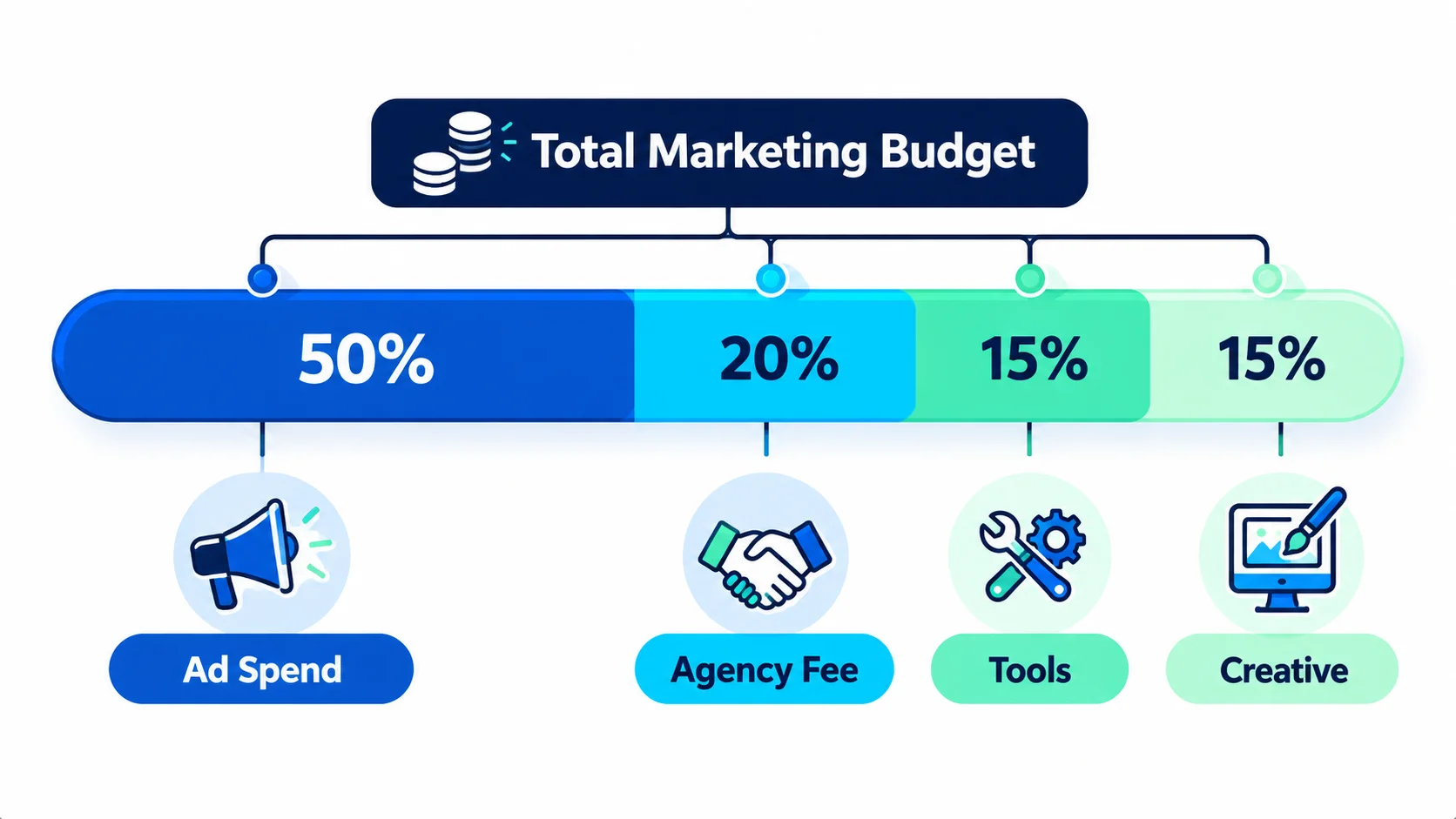
That total should cover everything: ad spend, any agency or freelancer fees, tools and creative. It’s an illustration, not a recommendation for your business.

Work Backwards From Customers
The percent rule tells you where to start. The better method is to work backwards from your goal:
- Decide how many new customers you want this quarter.
- Know what a customer is worth. Use average first sale or lifetime value.
- Estimate your close rate from lead to customer.
- Calculate how many leads you need. Customers divided by close rate.
- Estimate what a lead may cost in your market, then multiply.
If the numbers say you need more budget than you have, adjust the goal or improve your close rate before you throw money at ads. Our Google Ads cost guide can help you estimate lead costs.
How to Split a Small Budget
There’s no perfect split, but this is a sensible starting framework for a service business. It’s our rule of thumb, not an industry standard:
| Area | Typical share | Why |
|---|---|---|
| Paid ads (Google, Meta) | 40–50% | Fastest way to get leads while SEO builds |
| SEO and content | 20–30% | Compounds over time, lowers cost per lead later |
| Website and landing pages | 10–15% | Turns more clicks into enquiries |
| Tracking, tools and automation | 10–15% | Shows what works, speeds up follow-up |
If you need leads this month, lean toward paid ads. If you can wait six months and your market is competitive, put more into SEO.
Ad Budget vs Agency Fee
Keep these two numbers separate. Your ad budget goes to Google or Meta. Your management fee goes to whoever runs it. A very small ad budget with a large fee leaves little to actually test. Read our guide on agency pricing for how fees are usually structured.
When to Spend More
- You have a proven offer and a campaign already returning more than it costs.
- You have capacity to take on more customers.
- Your competitors are spending more and taking your search traffic.
- You are launching a new product or entering a new area.
When to Hold Back
- You can’t yet track which leads come from which channel.
- Your website doesn’t convert. Fix the page before buying more traffic.
- You’re slow to respond to leads. Faster follow-up often beats more spend.
Mistakes to Avoid
- Spreading a small budget over too many channels. Start with one or two and do them properly.
- Judging results in the first two weeks. Ads need time to learn, and SEO needs months.
- Cutting marketing in a slow month. It’s usually the worst time to go quiet.
- Counting only the ad bill. Include tools, creative and fees in your real cost per customer.
Frequently Asked Questions
What percentage of revenue should a small business spend on marketing?
A commonly cited guideline is 7–8% of revenue for small businesses under $5 million. New or fast-growing businesses often spend more. Use it as a starting point and adjust to your goals.
Is $1,000 a month enough for digital marketing?
It can work for one focused channel in a low-competition market, such as local search ads or one Meta campaign. It’s usually too small to run several channels well.
Should I spend on ads or SEO first?
If you need leads soon, start with ads. If you can invest for the long term, add SEO alongside. Most businesses benefit from both over time.
How do I know my budget is working?
Track leads, cost per lead and cost per customer. If you can’t see those numbers, fix tracking before you raise the budget.
Do agency fees count as marketing budget?
Yes. Your total budget should include ad spend, agency or freelancer fees, tools and creative.
Conclusion
Start with the percent-of-revenue rule, then refine it with your own customer numbers. If you’d like help turning your budget into a plan, book a free audit with Globdigi and we’ll show you where each dollar is likely to work hardest. You can also browse our marketing services.
Source: PostcardMania: Small Business Marketing Budget (reporting the 7–8% guideline attributed to the U.S. SBA). The worked example uses made-up figures.
Related Reading
- Digital Marketing ROI: How to Measure What Your Marketing Really Earns
- How Much Do Google Ads Cost? Average CPC by Industry
- How to Choose a Digital Marketing Agency: 12 Questions to Ask Before You Sign