

Legal keywords are some of the most expensive on all of Google. In many US cities, a single click for something like “car accident lawyer” can cost a lot of money, sometimes more than a nice dinner out.
That means every wrong click hurts. A lot.
The difference between a law firm that wins with Google Ads and one that gives up usually comes down to one thing: choosing the right keywords. The ones that bring people who need a lawyer now, not people who are curious, looking for free help, or searching for a job.
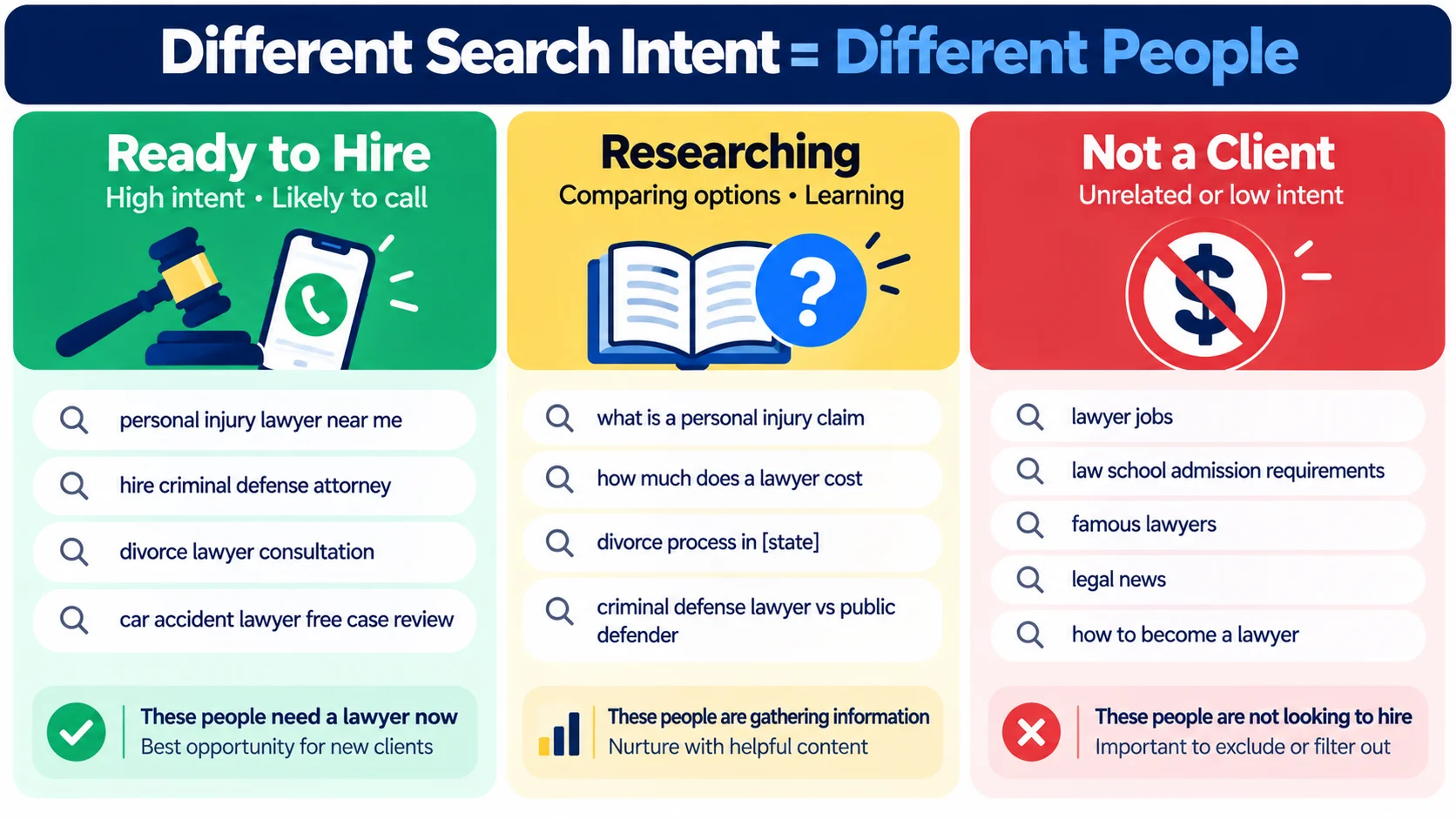
First, Understand the 3 Types of Legal Searches
1. “I need a lawyer now” searches ✅
These are gold. The person has a problem and is ready to talk to an attorney.
- “car accident lawyer near me”
- “DUI attorney Houston”
- “divorce lawyer free consultation”
- “workers comp attorney”
2. “I’m trying to understand my situation” searches ⚠️
These people have a problem but aren’t ready to hire yet. They might become clients later.
- “how much is my car accident case worth”
- “what happens after a DUI arrest”
- “how long does a divorce take in Texas”
These can work, but usually cost more per signed case. Many firms handle these with helpful blog content instead of expensive ads.
3. “Not your client” searches ❌
These burn money:
- “paralegal jobs”, “lawyer salary”, “law school”
- “free legal aid”, “pro bono lawyer” (unless you offer this)
- “how to file for divorce without a lawyer”
- “legal forms template”
Block these with negative keywords from day one.
Keywords That Usually Bring Real Cases
These patterns tend to work well for most practice areas:
| Keyword pattern | Example | Why it works |
|---|---|---|
| [Practice area] + lawyer/attorney | “personal injury attorney” | Clear intent to hire |
| + “near me” or city name | “DUI lawyer near me”, “divorce attorney Phoenix” | Local and ready to call |
| + “free consultation” | “injury lawyer free consultation” | Ready to take the next step |
| Specific situations | “truck accident lawyer”, “wrongful termination attorney” | Often higher-value cases, less competition |
| Urgent needs | “criminal defense lawyer 24 hours” | Needs help right now |
Go Specific to Save Money
Broad searches like “lawyer” or “attorney” are expensive and vague. The person could need anything, from a will to a criminal defense.
Specific searches often cost less and convert better:
- Instead of “car accident lawyer”, try also: “rear-end collision lawyer”, “Uber accident attorney”, “motorcycle accident lawyer”
- Instead of “family lawyer”, try also: “child custody lawyer”, “contested divorce attorney”
- Instead of “employment lawyer”, try also: “unpaid overtime lawyer”, “workplace discrimination attorney”
These specific searches often have fewer competitors, and the people searching know exactly what they need.
Your Must-Have Negative Keyword List
Start every legal account with a list like this, then add more every week from your search terms report:
- jobs, careers, hiring, salary, internship, paralegal
- school, degree, course, exam, bar exam
- free legal aid, pro bono (unless relevant)
- template, form, DIY, “without a lawyer”
- definition, meaning, “what is”
- Practice areas you don’t handle
- States or cities you’re not licensed in or don’t serve
Keywords Are Only Half the Story
Your intake process matters just as much
Law firms can lose a lot of Google Ads cases simply because nobody answered the phone, or a callback happened too late. People with legal problems often call several firms. The first one to answer, listen and book a consultation usually wins.
- Answer calls live whenever possible, including evenings if you advertise then
- Reply to forms within minutes
- Track which calls became signed cases, and feed that back into Google Ads
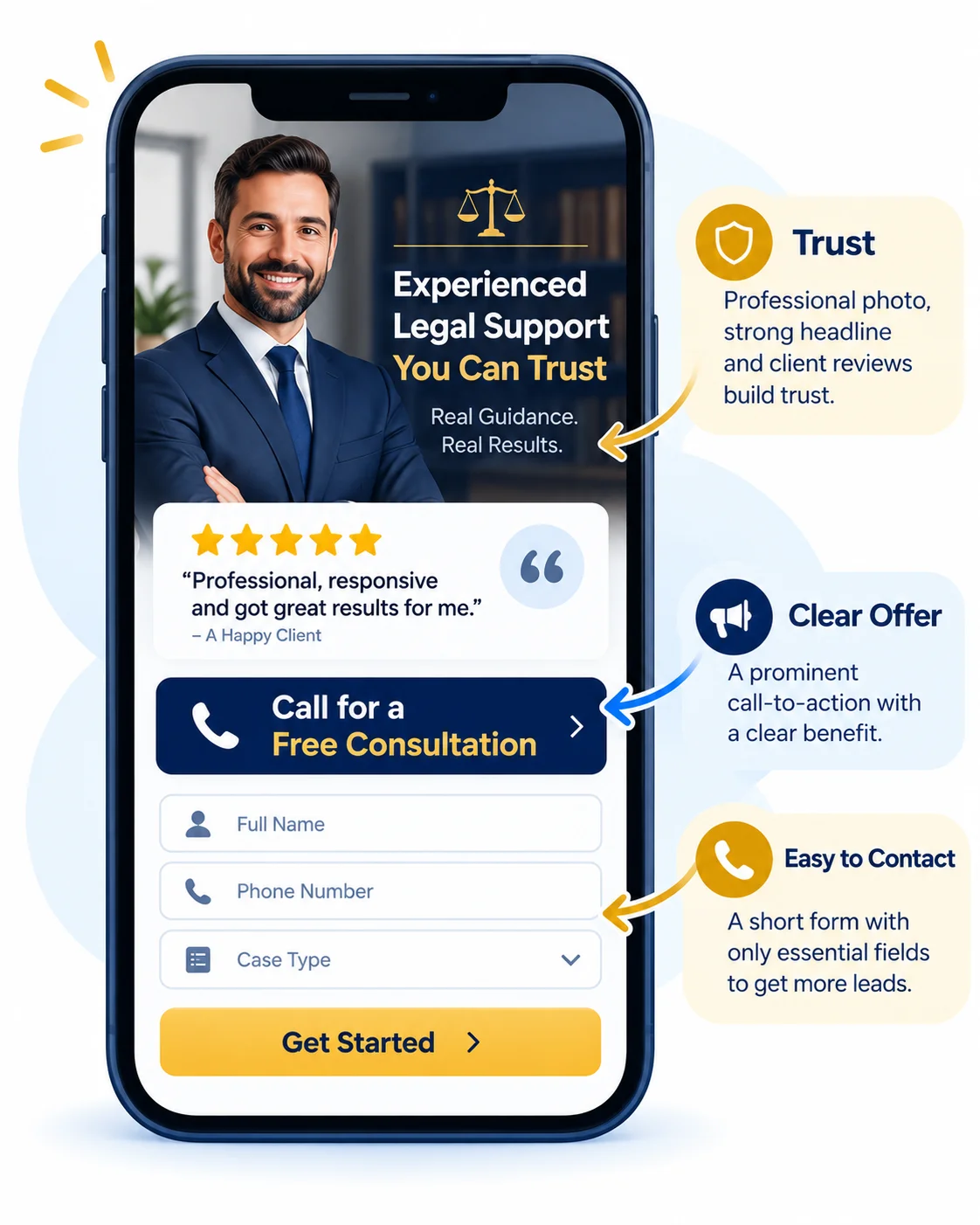
Your landing page must build trust fast
Someone looking for a lawyer is often stressed. Your page should quickly show:
- Who you help and where
- A clear phone number and “Free Consultation” button
- Reviews, results (where allowed) and years of experience
- A friendly photo of the attorney or team
Follow the advertising rules
Every state has its own rules for how attorneys can advertise. Some require specific disclaimers, and some limit how you can talk about past results. Make sure your ads and landing pages follow your state bar’s rules. When in doubt, check with your bar association.
Track Cases, Not Just Leads
A $150 lead that becomes a signed personal injury case is a bargain. A $40 lead that’s a wrong number isn’t. That’s why law firms should measure:
- Cost per lead: useful, but not the full picture
- Cost per consultation: better
- Cost per signed case: the number that really matters
Quick Answers to Common Questions
How much should a law firm spend on Google Ads?
It depends heavily on your practice area and city. Personal injury in a big city is very competitive, while niche practice areas in smaller markets can cost far less. Work backwards from how much a signed case is worth to you. Our guide on Google Ads management pricing also explains what’s normal to pay for management. Prices change, so verify with the official source or website; info may be inaccurate or outdated.
Should I bid on competitors’ firm names?
You can, but it’s often less effective than it sounds and can get expensive. Focus on strong practice-area keywords first.
Do Google Local Service Ads work for lawyers?
In many US areas, yes. LSAs are available for several legal practice areas and can be a good add-on to Search Ads, especially if you have strong reviews. Availability varies by location, so check Google’s official site.
The Bottom Line
Google Ads can be one of the best sources of new cases for a law firm, but only if you pay for the right searches. Focus on “ready to hire” keywords, go specific, block the junk early, answer every call quickly and measure cost per signed case.
See how we help firms on our law firm marketing page, or explore our work for professional services. You can also use our 12-point Google Ads audit checklist to check your current account.
👉 Get a free Google Ads audit for your law firm. We’ll show you which keywords are bringing cases and which are just burning budget.
Disclaimer: This article is for general information only and is not legal advice. Prices, features, policies, laws and results can change or may not apply to your situation, and we do not guarantee accuracy, outcomes or future performance. Please verify important details, including pricing and commitments, with the official source or website, or a qualified professional, before acting on them.